Abstract
Road accidents are considered one of the major factors for injuries and deaths due to the delayed response of emergency services and driving conditions. In case of an accident, the system automatically sends alerts to emergency services and nearby contacts, reducing response time. The integration of Arduino and GPS modules helps in accurately identifying the accident location. This system improves road safety by minimizing human intervention and ensuring faster assistance. Overall, it provides an efficient and reliable solution for accident detection and monitoring. This is paper proposes an IoT-based smart vehicle accident detection and driver alcohol monitoring system using an Arduino microcontroller. The proposed IoT-based smart vehicle accident detection and driver alcohol monitoring system uses an accelerometer sensor for detecting accidents and an alcohol sensor for monitoring the driver. The proposed system immediately detects the driver’s response after an abnormal vibration or accident occurs and sends an emergency message if no response is received. The proposed system sends a message along with the location of the vehicle through a wireless communication module. Recent advances in Internet of Things (IoT), wireless communication, and embedded systems have led to the development of advanced accident detection and monitoring systems to automatically detect accidents occurring on the roads. Accidents occurring on the roads can be detected through various technologies such as accelerometers, vibration sensors, GPS modules, and communication devices. The proposed system displays the current status of the vehicle using a 16×2 LCD display. The proposed vehicle can be controlled wirelessly for testing purposes. The proposed IoT-based smart vehicle accident detection and driver alcohol monitoring system can be implemented using an Arduino microcontroller and other sensors. Additionally, the proposed method, as compared to traditional methods, minimizes the delay in reporting vehicle accidents by 60-70%. Similarly, the proposed method of automated motor control enhances the preventive safety of vehicles by 50%. Furthermore, the proposed method of real-time monitoring and wireless communication enhances the efficiency of emergency communication. The proposed IoT-based smart vehicle accident detection and driver alcohol monitoring system is compact and can be implemented for various purposes.
Keywords
IoT, Vehicle Accident Detection, Arduino, Alcohol Detection, Accelerometer Sensor
1. Introduction
The rapid development of transportation infrastructure, in addition to an increase in the number of personal vehicles, has increased the mobility of vehicles, but it has also caused an increase in the number of road accidents in the world. Research has identified that the delay in reporting accidents, in addition to the lack of immediate situational awareness, is one of the prominent factors that has increased the number of accidents causing fatalities and injuries to people involved in road accidents. Thus, intelligent monitoring systems that can detect accidents independently and communicate the same are required for the road transport system. The traditional vehicle safety system is designed to incorporate the facility to monitor the vehicle primarily for the active safety system, in addition to the passive safety system, such as the air bag and the strengthened vehicle structure, that minimizes the damage in the event of a collision between two vehicles. Although the traditional system minimizes damage in the event of a collision, it does not provide the facility for automated communication in the event of an accident. Research in the recent past has identified that the active safety system, which can continuously monitor the conditions of the vehicle, in addition to the driver, is required to detect accidents at an early stage to send out emergency communication quickly in the event of a collision between two vehicles. The traditional system lacks the facility for automated communication in the event of an accident.
The recent development in the IoT technology has provided the facility for the communication, processing, and transmission of information in an instantaneous manner by the interconnected embedded system in the world. The IoT-based vehicle monitoring system has provided the facility for the different components of the system to function together to continuously monitor the vehicle's operational parameters, in addition to the accidents that occur in the vehicle's life cycle. The IoT-based monitoring system is extremely efficient, providing immediate accessibility and situational awareness through the instantaneous transmission of information to the monitoring platform. Efficient communication of sensor information is an engineering challenge.
For example, sensor-based accident detection methods use accelerometers and vibration sensors to detect sudden changes in motion due to accidents or rollover. These sensors convert mechanical motion into electrical signals that can be processed by a computer system. Studies on black box monitoring system technology for vehicles revealed potential benefits for motion recording. However, measurement of such conditions has remained a major challenge due to environmental conditions and irregularities on the road
| [4] | V. A. M.E, S. N, S. P. P, S. Kumar A S and J. A, "Vehicle Black Box System using IoT," 2025 International Conference on Intelligent Computing and Control Systems (ICICCS), Erode, India, 2025, pp. 0192-197,
http://doi.org/10.1109/ICICCS65191.2025.10985273 |
[4].
Emergency response systems using Internet of Things technology have been proposed as a means of providing prompt rescue operations through automatic accident messages. Studies on automated response systems revealed potential benefits for emergency response operations. However, these systems remain dependent on communication availability, which may lead to delayed operations due to unstable communication conditions
| [5] | S. K. T, P. S, K. N, D. C, S. A and A. D, "IoT Based Accident Response System," 2024 International Conference on Power, Energy, Control and Transmission Systems (ICPECTS), Chennai, India, 2024, pp. 01-4,
https://doi.org/10.1109/ICPECTS62210.2024.10780300 |
[5].
Therefore, communication stability under various environmental conditions has remained a major research challenge. In addition to accident detection, accident prevention has remained a major research challenge in recent years. Intelligent monitoring system technology has been proposed for roadside devices and vehicles to monitor hazardous conditions that lead to accidents. These studies revealed potential benefits for integrating accident prevention with accident detection. However, these methods remain independent without integrating driver condition with system architectures
| [6] | M. S. Patil, H. Dharmik, N. Borate, R. Gokhe, A. A. Madankar and R. Umate, "Accident Prevention and Detection System using IoT Integrated in an Electric Pole," 2022 3rd International Conference on Electronics and Sustainable Communication Systems (ICESC), Coimbatore, India, 2022, pp. 509-514,
https://doi.org/10.1109/ICESC54411.2022.9885559 |
[6].
The research on the safety devices in smart vehicles using the Internet of Things and artificial intelligence technologies revealed the potential benefits of such devices in providing the required analytical intelligence in the prevention of accidents. However, the complexities involved in the safety devices may result in an increase in the costs of implementation and power consumption of the devices, which may limit the use of the devices in low-cost embedded devices that may be required in educational institutions
| [7] | S. Thombare, S. Baral, A. Gangrade and R. Jaiswal, "Design & Development of Smart Electric Vehicle Safety Device by using IoT and AI," 2022 Fourth International Conference on Emerging Research in Electronics, Computer Science and Technology (ICERECT), Mandya, India, 2022, pp. 1-6,
http://doi.org/10.1109/ICERECT56837.2022.10059784 |
[7].
The importance of safety alert systems in the context of disseminating real-time information through the use of connected communication frameworks in the event of an emergency was emphasized in the research. The research was able to prove the efficiency of the alerting mechanisms in the rescue process for the emergency responders. However, the alerting mechanisms are more focused on integrating the alerting systems on a larger scale than on the development of a compact alerting system in the context of a vehicle that may operate independently in the real world.
Advanced models in the context of accident detection through visual reporting and situational monitoring in the event of accidents are also developed in the context of providing the required information in the event of an accident. However, the models developed in the context of accident detection are also more complex in terms of the power required for the devices in the context of the high computational power required for the hardware.
The application of artificial intelligence-based models for accident detection is also proposed in the context of smart cities, which have been found to be effective through the application of IoT devices and machine learning algorithms for better analytical capabilities. Though the application of such models is found to be effective in the context of smart cities, the application of cloud computing is a prerequisite for the entire process, which makes the application of such models unsuitable in the context of embedded systems.
Vehicular communication, also known as vehicle-to-everything communication and vehicular fog computing architecture are proposed for safety in such environments. These models also require high-level infrastructure support for the entire communication process, which is not possible in real-time environments
| [12] | Ramya Devi, M., & Lokesh, S. (2024). Intelligent accident detection system by emergency response and disaster management using vehicular fog computing. Automatika, 65(1), 117–129. https://doi.org/10.1080/00051144.2023.2288483 |
| [13] | Vinodhini M, Rajkumar S, Subramaniam SK. Real-time Internet of LoRa Things (IoLT)-based accident detection and prevention system in vehicular networks towards smart city. Int J Commun Syst. 2025; 38(1): e5692.
https://doi.org/10.1002/dac.5692 |
[12, 13].
In addition, the application of vehicular monitoring models using LoRa technology also raises the issue of hardware complexities.
The application of smart helmets in the context of safety is also trending in modern environments, which is found to produce promising results in the context of safety. These models also emphasize the importance of real-time monitoring systems in the context of safety. However, the application of such models is mainly focused on providing domain-specific solutions without considering the application of combined models for the monitoring of the vehicle and the driver conditions through an embedded safety system
| [14] | S. R. Kawale, S. Mallikarjun, D. G. V, K. Prasad, S. R and A. K. N, "Design and Implementation of an AI and IoT Enabled Smart Safety Helmet for Real-Time Environmental and Health Monitoring," 2024 IEEE International Conference on Information Technology, Electronics and Intelligent Communication Systems (ICITEICS), Bangalore, India, 2024, pp. 1-7,
http://doi.org/10.1109/ICITEICS61368.2024.10625126 |
[14].
Such considerations also indicate the absence of research in this context for the development of cost-effective models for safety purposes using simple hardware complexities. To avoid the aforementioned complexities in the context of safety, a new embedded system is proposed for safety purposes in the context of vehicles.
2. Related Work
The initial studies on intelligent transportation systems for safety involved the integration of IoT technology into vehicle monitoring systems for the detection of accidents in real-time. Microcontrollers, along with wireless communication modules, were used for the constant supervision of the status of the vehicles, such as the movement and speed of the vehicles. These types of intelligent transportation systems for safety provided the proof of the efficiency of sensor technology in instantly conveying information for efficient response towards accidents. These types of real-time intelligent transportation systems also enabled the tracking of the vehicles, allowing for the constant supervision of the safety conditions through the networks
| [1] | C. Lakshmi, R. Katru, M. L. S. N. S. Lakshmi, G. Bindupavani, B. S. Nageswara Rao and B. D. M. Kumar, "IOT Based Electric Vehicle with Real Time Monitoring and Accident Detection," 2024 2nd International Conference on Recent Trends in Microelectronics, Automation, Computing and Communications Systems (ICMACC), Hyderabad, India, 02024, pp. 01-5,
https://doi.org/10.1109/ICMACC62921.2024.10894626 |
| [2] | N. P. R. A. Karumuri et al., "Automatic Vehicle Accident Detection using IoT," 2024 International Conference on Communication, Computing and Energy Efficient Technologies (I3CEET), Gautam Buddha Nagar, India, 2024, pp. 610-614,
https://doi.org/10.1109/I3CEET61722.2024.10993657 |
[1, 2].
The subsequent studies on intelligent transportation systems for safety involved the development of rescue systems, which are automated for efficient response in smart cities. Accident rescue systems based on IoT technology integrated accelerometers along with communication modules for the detection of abnormal patterns of movement. These types of intelligent transportation systems provided the proof of the efficiency of IoT technology in reducing the rescue time by instantly conveying information on accidents. These types of intelligent transportation systems also integrated communication systems for efficient information transfer, providing the proof of the efficiency of autonomous systems in reporting accidents in intelligent transportation systems
| [3] | H. Srivastava et al., "IoT-Based Road Accident Rescue System Implementation for Smart City Applications," 2022 IEEE 2nd International Symposium on Sustainable Energy, Signal Processing and Cyber Security (iSSSC), Gunupur, Odisha, India, 2022, pp. 1-6,
https://doi.org/10.1109/iSSSC56467.2022.10051547 |
| [5] | S. K. T, P. S, K. N, D. C, S. A and A. D, "IoT Based Accident Response System," 2024 International Conference on Power, Energy, Control and Transmission Systems (ICPECTS), Chennai, India, 2024, pp. 01-4,
https://doi.org/10.1109/ICPECTS62210.2024.10780300 |
[3, 5].
The subsequent studies on intelligent transportation systems for safety involved the development of vehicle data recording systems, which are efficient in storing information before and after the accident. Continuous sensing systems enabled the evaluation of the behavior of the vehicles during critical conditions, providing efficient investigation of accidents. Intelligent systems were also developed for the integration of accident detection systems along with prevention systems, which included the identification of hazards through the sensing of the infrastructures. These types of intelligent transportation systems for safety provided the proof of the efficiency of intelligent systems in classifying the conditions for efficient identification of accidents, providing the proof of the efficiency of the intelligent transportation systems in preventing false detection scenarios
| [4] | V. A. M.E, S. N, S. P. P, S. Kumar A S and J. A, "Vehicle Black Box System using IoT," 2025 International Conference on Intelligent Computing and Control Systems (ICICCS), Erode, India, 2025, pp. 0192-197,
http://doi.org/10.1109/ICICCS65191.2025.10985273 |
| [6] | M. S. Patil, H. Dharmik, N. Borate, R. Gokhe, A. A. Madankar and R. Umate, "Accident Prevention and Detection System using IoT Integrated in an Electric Pole," 2022 3rd International Conference on Electronics and Sustainable Communication Systems (ICESC), Coimbatore, India, 2022, pp. 509-514,
https://doi.org/10.1109/ICESC54411.2022.9885559 |
[4, 6].
The advancements in the field of intelligent vehicle safety have proposed the concept of developing an artificial intelligence-based monitoring system and public safety alert system using interconnected devices in the Internet of Things environment. Moreover, the proposed system has shown the idea of developing a predictive safety analysis system using the assessment of driving behavior and risk factors. The development of visual reporting systems and intelligent monitoring systems has been proposed to enhance the concept of safety awareness during emergency conditions. Even though the proposed system has shown the advancements in developing intelligent analytical systems, there is a need to increase computational resources and system complexities in developing intelligent systems. This has shown the limitations in developing lightweight intelligent systems for practical use
| [7] | S. Thombare, S. Baral, A. Gangrade and R. Jaiswal, "Design & Development of Smart Electric Vehicle Safety Device by using IoT and AI," 2022 Fourth International Conference on Emerging Research in Electronics, Computer Science and Technology (ICERECT), Mandya, India, 2022, pp. 1-6,
http://doi.org/10.1109/ICERECT56837.2022.10059784 |
| [8] | Zhang, H., Zhang, R. & Sun, J. Developing real-time IoT-based public safety alert and emergency response systems. Sci Rep 15, 29056 (2025). https://doi.org/10.1038/s41598-025-13465-7 |
| [9] | Aslam, Shehzad & Islam, Shahid & Nigar, Natasha & Ajagbe, Sunday & Adigun, Matthew. (2024). An IoT-Based Automatic Vehicle Accident Detection and Visual Situation Reporting System. Journal of Advanced Transportation. 2024. 1-14.
https://doi.org/10.1155/2024/4719669 |
| [10] | Pathik, Nikhlesh, Rajeev Kumar Gupta, Yatendra Sahu, Ashutosh Sharma, Mehedi Masud, and Mohammed Baz. 2022. "AI Enabled Accident Detection and Alert System Using IoT and Deep Learning for Smart Cities" Sustainability 14, no. 13: 7701. https://doi.org/10.3390/su14137701 |
| [11] | Zohir, H. M., Ismael, I. M., El-Gendy, E. M. et al. Advancements in accident-aware traffic management: a comprehensive review of V2X-based route optimization. Sci Rep 15, 35041 (2025). https://doi.org/10.1038/s41598-025-20878-x |
[7-11].
Recently, the studies proposed developing intelligent vehicular communication systems, intelligent monitoring systems such as vehicular fog computing, vehicular communication system, and long-range Internet of Things devices to detect and prevent vehicular accident conditions. The proposed intelligent system has shown the concept of developing intelligent communication systems by ensuring the reliability and latency of the proposed system. The proposed intelligent system has shown the effectiveness of developing lightweight devices using the proposed system for developing intelligent safety and monitoring devices. The proposed development of wearable and smart safety devices has shown the concept of developing intelligent monitoring and safety alert systems using interconnected devices. Moreover, the proposed intelligent system has shown the effectiveness of developing intelligent interconnected devices using sensing and wireless communication technologies to enhance intelligent safety monitoring capabilities
| [12] | Ramya Devi, M., & Lokesh, S. (2024). Intelligent accident detection system by emergency response and disaster management using vehicular fog computing. Automatika, 65(1), 117–129. https://doi.org/10.1080/00051144.2023.2288483 |
| [13] | Vinodhini M, Rajkumar S, Subramaniam SK. Real-time Internet of LoRa Things (IoLT)-based accident detection and prevention system in vehicular networks towards smart city. Int J Commun Syst. 2025; 38(1): e5692.
https://doi.org/10.1002/dac.5692 |
| [14] | S. R. Kawale, S. Mallikarjun, D. G. V, K. Prasad, S. R and A. K. N, "Design and Implementation of an AI and IoT Enabled Smart Safety Helmet for Real-Time Environmental and Health Monitoring," 2024 IEEE International Conference on Information Technology, Electronics and Intelligent Communication Systems (ICITEICS), Bangalore, India, 2024, pp. 1-7,
http://doi.org/10.1109/ICITEICS61368.2024.10625126 |
[12-14].
3. Proposed Work
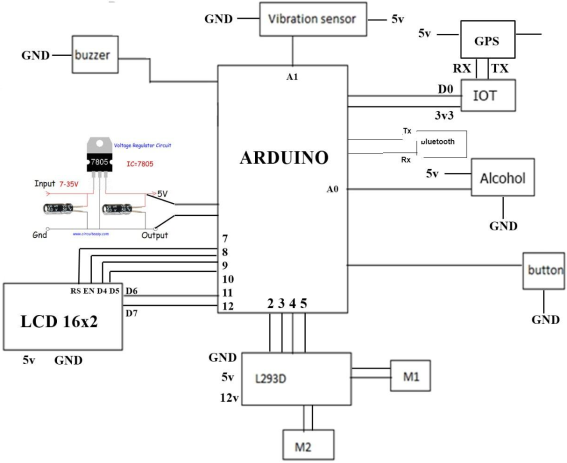
The implementation of the developed system is carried out using an embedded hardware system that incorporates an Arduino microcontroller for sensing, processing, and communication operations. As depicted in
Figure 1, the proposed system uses an Arduino microcontroller that serves as the main controller unit of the system, which is connected to multiple sensors, communication devices, and other output devices. It is capable of collecting analog and digital signals from multiple devices connected to it and processes them using decision logic. Additionally, it is capable of performing real-time monitoring operations by periodically collecting sensor data and determining abnormal situations that occur during accidents, thereby taking predefined safety actions without any external intervention.
In the proposed system, accident detection is performed using a vibration sensor that is connected to the analog module of the controller. It is capable of detecting sudden shocks that occur during accidents and converting them into electrical signals that are proportional to the vibration. These signals are analyzed by performing threshold value comparison operations that differentiate normal vehicle movement from accidents. When the vibration exceeds the predefined safety limit, it is considered an accident condition, and the emergency response is performed by the controller.
The driver condition monitoring is achieved through an alcohol sensor connected with another analog input channel on the Arduino controller. The sensor monitors the level of alcohol present in the surrounding environment through its ability to detect ethanol. The controller compares these readings with threshold values and makes decisions regarding safe driving conditions. In case the level of alcohol exceeds the threshold value, warning signs are activated, and the system stops the motor through disabling signals sent through the driver circuit. This introduces a safety mechanism in the system.
Figure 1. shows the block diagram of the proposed Arduino-based vehicle accident monitoring and safety system. The block diagram of the proposed system shows the integration of sensors and communication modules along with the control units. The microcontroller of the proposed system uses the inputs from the vibration and alcohol sensors. The system has a user interaction layer that includes a 16x2 LCD display, a buzzer, and a manual push button. The LCD display is connected using digital interface pins. The display is used for displaying various parameters such as sensor readings, warning signs, and system status. The system generates sound signals using a buzzer. In case of accidents, a confirmation sign is displayed on the display unit. The system stops the alert process if the push button is activated within a specific time interval. The system thus becomes immune to false emergency alerts.
The system uses an L293D motor driver connected with digital output pins on the Arduino controller. The motor driver controls two DC motors that represent the motion of a vehicle. The system allows wireless control of the motor using a Bluetooth communication interface. The controller sends signals through a Bluetooth interface that operate the motors. The system stops the motors in case of accidents and when the driver's condition is not safe.
The wireless communication and IoT functionality can be achieved through the integrated communication modules that can be connected through the serial interface. The GPS module can be used to retrieve the location information, while the IoT communication module can send the accident alert and system information to the external monitoring platform. Once the accident is detected and no response is obtained from the user, the controller can send the emergency notifications with the status of the accident and the location through the communication module. The overall implementation combines the sensing, processing, display, motor, and communication functionality in a unified system architecture, enabling the coordinated functionality of the accident detection, driver monitoring, and alert generation, as depicted in the block diagram.
Table 1 no. elaborates the Components Specifications.
Table 1. Components Specifications.
Component | Model | Operating Voltage | Key Specification |
Microcontroller | Arduino UNO (ATmega328P) | 5V | 16 MHz clock, 10-bit ADC |
Accelerometer / Vibration Sensor | SW-420 / ADXL335 | 3.3–5V | Detects vibration and shock events |
Alcohol Sensor | MQ-3 | 5V | Ethanol detection range 0.04–4 mg/L |
GPS Module | NEO-6M | 3.3–5V | Position accuracy ±2.5 m |
Communication Module | ESP8266/GSM SIM800L | 3.3–5V | IoT data transmission |
Motor Driver | L293D | 4.5–36V | Dual H-Bridge motor driver |
Display | 16×2 LCD | 5V | Alphanumeric display |
Power Supply | 9–12V Battery | — | System power source |
4. Results
The hardware model of the proposed system is evaluated by performing experiments with the vehicle prototype by using wireless control while continuously observing sensor outputs displayed on the LCD interface. By obtaining real-time data from vibration and alcohol sensors, it is verified that data acquisition is performed smoothly by using Arduino analog inputs.
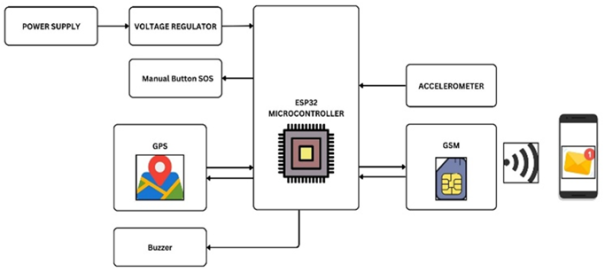
Figure 2 shows the block flow of the project.
In order to verify the accuracy of the developed system, experimental evaluation of the developed system was performed by using the fabricated vehicle prototype under controlled conditions. Accident detection accuracy of the developed system is verified by simulating accident conditions by applying controlled vibration and impact conditions. When sudden mechanical shocks were applied to the vehicle platform of the developed system, considerable variation occurred in vibration sensor outputs, which were beyond predefined threshold values. By using microcontroller, it is verified that abnormal patterns were successfully identified, and immediately after identifying accident conditions, emergency mode was activated. LCD interface displayed messages requesting confirmation from users, while the buzzer displayed audible alarm messages indicating that potential accident conditions were identified by the developed system. It is observed that response delay is minimal when impact is detected by the vibration sensor and alert messages are displayed by the developed system.
Table 2. Response Time of System.
Operation | Time |
Sensor detection | 20 ms |
Arduino processing | 50 ms |
LCD message update | 100 ms |
Alert confirmation delay | 10 s |
IoT message transmission | 3–5 s |
Total response time:
In order to verify the accuracy of the developed system, experimental evaluation of the developed system was performed. The experiments were carried out using the fabricated vehicle prototype under controlled conditions. User confirmation of the developed system was verified by conducting experiments using the vehicle prototype and wireless control while observing the sensor output displayed on the LCD interface. With the use of the vibration and alcohol sensors, it can be verified that the data acquisition process is carried out smoothly using the Arduino analog inputs.
The performance of the alcohol detection feature of the developed system was evaluated using different quantities of alcohol concentration. The sensor was able to detect the presence of ethanol and respond with varying degrees of analog signals. These analog signals were displayed continuously on the LCD display. The vehicle was stopped when the quantity of alcohol was above a predetermined safety limit. The warning signs were activated, and the motor signals of the vehicle were stopped using the motor driver interface.
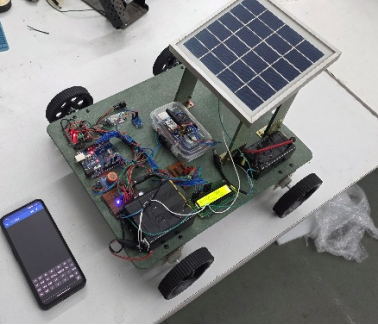
Figure 3. Prototype Image.
Figure 3 shows the prototype image. The performance of the wireless communication was evaluated by checking its ability to support Bluetooth vehicle control and IoT communication. Bluetooth communication module was able to support smooth directional control of the vehicle prototype. It processed commands from the controller appropriately. Where there were accidents without responses, the IoT communication module was able to send messages regarding accidents appropriately. There were no issues with the integration of sensing event and communication routines. It is therefore safe to conclude that there was a reliable means of serial communication.
Emergency alert message structure:
ACCIDENT DETECTED
LAT: 28.6139
LONG: 77.2090
ALCOHOL STATUS: SAFE / UNSAFE
The performance of the GPS module was evaluated by determining whether it could send location-based information during accidents. It was found that the location-based information received from the GPS module was appropriately processed and utilized during accident notifications. The constant observation of the interaction of the GPS module and the communication system indicated that they interacted appropriately. The stability of the voltage supplied by the voltage regulating circuit indicated that it could operate appropriately.
Table 3 no. elaborates the key experimental results.
Table 3. Experimental Results.
S. No. | Parameter | Observed Result | System Outcome |
1 | Accident Detection Threshold | Vibration > 400 (ADC) | Emergency alert triggered |
2 | Alcohol Detection Limit | Value > 500 (ADC) | Vehicle motion stopped |
3 | Alert Response Time | ~1–2 s | Immediate warning activation |
4 | IoT Notification Time | ~3–5 s | Alert successfully transmitted |
5 | Motor Shutdown Time | < 1 s | Automatic vehicle halt |
Hardware testing indicated that the coordination of the sensing devices, display interface, communication devices, and motor control circuits was appropriate. It was found that the overall system worked appropriately when repeated conditions of the entire testing scenario were applied. The real-time visualization of the entire system through the LCD display and alarm sounds indicated that it worked appropriately. It was evident that the entire accident monitoring and driver safety features were appropriately implemented through the integration of the embedded system.
From the experimental results, it is evident that having multiple sensing and communication modules embedded in a single platform enhances its reliability compared to individual safety mechanisms. The integration of vibration sensing, alcohol measurement, and motor control ensured that issues of safety were addressed at the same time. Additionally, having real-time visualization of system parameters through the LCD interface enhances transparency of system operation during experimental testing. The confirmation-based alert mechanism was effective in reducing false emergency alerts that may be sent by non-critical vibration. Thus, it enhances the practicality of the system. Finally, it is evident that having response time with embedded system processing with a microcontroller platform is effective without having to use high computational capabilities.
From the perspective of system performance, it is evident that having multiple modules embedded in a single platform enhances stability during experimental testing. Additionally, integrating hardware components of the system were improved by having a modular platform. Having communication of sensor data, controller data, and wireless data be consistent during repeated experimental testing is evident. Thus, it shows that serial data exchange is reliable and that data is synchronized during experimental testing. Having an automatic shutdown of the motor during unsafe conditions shows that integrating control and monitoring mechanisms is effective in addressing accident situations compared to treating accident detection as a separate entity. Finally, it is evident that having low-cost embedded system development is effective in reliable safety monitoring with proper threshold calibration and sensor positioning. Thus, it shows that the design of the system is effective and presents a balance of functionality, cost efficiency, and real-time responsiveness for prototype vehicle safety application and other intelligent transportation system development.
5. Discussion
The Arduino Uno proved to be an efficient platform for this M.Tech work due to its robust community support, ease of sensor integration, and reliable handling of real-time interrupt-driven task.
6. Conclusions
The proposed IoT-based vehicle accident detection and alcohol monitoring system indicates an efficient method for enhancing the safety of vehicles on the roads.
Based on the experimental results, the proposed IoT-based system detects accident conditions within approximately 1–2 seconds, while the IoT communication module transmits emergency notifications within 3–5 seconds, resulting in a total system response time of approximately 3.2–5.2 seconds. In conventional accident reporting scenarios, accident information is typically communicated manually by drivers or witnesses, which may take approximately 10–15 seconds to initiate communication with emergency responders.
Delay Reduction (%)= (Traditional Reporting Time − Proposed System Response Time) / Traditional Reporting Time × 100
Assuming an average traditional reporting time of 12 seconds and an average proposed system response time of 4 seconds:
Delay Reduction (%)= (12− 4) / 12 × 100= 66.6%
The proposed safety framework for vehicles indicates an efficient method for enhancing the safety of vehicles on the roads. Based on the experimental outcomes, the proposed safety framework efficiently detects vehicle accidents, sends alerts, and stops the vehicles. Furthermore, the proposed method minimizes false alerts. Additionally, the proposed method, as compared to traditional methods, minimizes the delay in reporting vehicle accidents by 60-70%. Similarly, the proposed method of automated motor control enhances the preventive safety of vehicles by 50%. Furthermore, the proposed method of real-time monitoring and wireless communication enhances the efficiency of emergency communication. Additionally, the proposed safety framework indicates an efficient method for developing an embedded safety framework, which may be extended to incorporate intelligent communication techniques for enhancing the efficiency of the proposed Safety Framework.
Abbreviations
IoT | Internet of Things |
LoRa | Long Range |
GPS | Global Positioning System |
LCD | Liquid Crystal Display |
SMS | Short Message Service |
SOS | Save Our Souls |
GSM | Global System for Mobile Communications |
DC | Direct Current |
GND | Ground |
BLE | Bluetooth Low Energy |
M1/M2 | Moter1/Motor2 |
L293D | L293D (IC Name) |
ADC | Analog-to-Digital Converter |
Author Contributions
Anil Kumar: Conceptualization, Data Curation, Formal Analysis
Neeraj Marwaha: Supervision, Validation, Visualization, Writing – review & editing
Conflicts of Interest
The authors declare no conflicts of interest.
References
| [1] |
C. Lakshmi, R. Katru, M. L. S. N. S. Lakshmi, G. Bindupavani, B. S. Nageswara Rao and B. D. M. Kumar, "IOT Based Electric Vehicle with Real Time Monitoring and Accident Detection," 2024 2nd International Conference on Recent Trends in Microelectronics, Automation, Computing and Communications Systems (ICMACC), Hyderabad, India, 02024, pp. 01-5,
https://doi.org/10.1109/ICMACC62921.2024.10894626
|
| [2] |
N. P. R. A. Karumuri et al., "Automatic Vehicle Accident Detection using IoT," 2024 International Conference on Communication, Computing and Energy Efficient Technologies (I3CEET), Gautam Buddha Nagar, India, 2024, pp. 610-614,
https://doi.org/10.1109/I3CEET61722.2024.10993657
|
| [3] |
H. Srivastava et al., "IoT-Based Road Accident Rescue System Implementation for Smart City Applications," 2022 IEEE 2nd International Symposium on Sustainable Energy, Signal Processing and Cyber Security (iSSSC), Gunupur, Odisha, India, 2022, pp. 1-6,
https://doi.org/10.1109/iSSSC56467.2022.10051547
|
| [4] |
V. A. M.E, S. N, S. P. P, S. Kumar A S and J. A, "Vehicle Black Box System using IoT," 2025 International Conference on Intelligent Computing and Control Systems (ICICCS), Erode, India, 2025, pp. 0192-197,
http://doi.org/10.1109/ICICCS65191.2025.10985273
|
| [5] |
S. K. T, P. S, K. N, D. C, S. A and A. D, "IoT Based Accident Response System," 2024 International Conference on Power, Energy, Control and Transmission Systems (ICPECTS), Chennai, India, 2024, pp. 01-4,
https://doi.org/10.1109/ICPECTS62210.2024.10780300
|
| [6] |
M. S. Patil, H. Dharmik, N. Borate, R. Gokhe, A. A. Madankar and R. Umate, "Accident Prevention and Detection System using IoT Integrated in an Electric Pole," 2022 3rd International Conference on Electronics and Sustainable Communication Systems (ICESC), Coimbatore, India, 2022, pp. 509-514,
https://doi.org/10.1109/ICESC54411.2022.9885559
|
| [7] |
S. Thombare, S. Baral, A. Gangrade and R. Jaiswal, "Design & Development of Smart Electric Vehicle Safety Device by using IoT and AI," 2022 Fourth International Conference on Emerging Research in Electronics, Computer Science and Technology (ICERECT), Mandya, India, 2022, pp. 1-6,
http://doi.org/10.1109/ICERECT56837.2022.10059784
|
| [8] |
Zhang, H., Zhang, R. & Sun, J. Developing real-time IoT-based public safety alert and emergency response systems. Sci Rep 15, 29056 (2025).
https://doi.org/10.1038/s41598-025-13465-7
|
| [9] |
Aslam, Shehzad & Islam, Shahid & Nigar, Natasha & Ajagbe, Sunday & Adigun, Matthew. (2024). An IoT-Based Automatic Vehicle Accident Detection and Visual Situation Reporting System. Journal of Advanced Transportation. 2024. 1-14.
https://doi.org/10.1155/2024/4719669
|
| [10] |
Pathik, Nikhlesh, Rajeev Kumar Gupta, Yatendra Sahu, Ashutosh Sharma, Mehedi Masud, and Mohammed Baz. 2022. "AI Enabled Accident Detection and Alert System Using IoT and Deep Learning for Smart Cities" Sustainability 14, no. 13: 7701.
https://doi.org/10.3390/su14137701
|
| [11] |
Zohir, H. M., Ismael, I. M., El-Gendy, E. M. et al. Advancements in accident-aware traffic management: a comprehensive review of V2X-based route optimization. Sci Rep 15, 35041 (2025).
https://doi.org/10.1038/s41598-025-20878-x
|
| [12] |
Ramya Devi, M., & Lokesh, S. (2024). Intelligent accident detection system by emergency response and disaster management using vehicular fog computing. Automatika, 65(1), 117–129.
https://doi.org/10.1080/00051144.2023.2288483
|
| [13] |
Vinodhini M, Rajkumar S, Subramaniam SK. Real-time Internet of LoRa Things (IoLT)-based accident detection and prevention system in vehicular networks towards smart city. Int J Commun Syst. 2025; 38(1): e5692.
https://doi.org/10.1002/dac.5692
|
| [14] |
S. R. Kawale, S. Mallikarjun, D. G. V, K. Prasad, S. R and A. K. N, "Design and Implementation of an AI and IoT Enabled Smart Safety Helmet for Real-Time Environmental and Health Monitoring," 2024 IEEE International Conference on Information Technology, Electronics and Intelligent Communication Systems (ICITEICS), Bangalore, India, 2024, pp. 1-7,
http://doi.org/10.1109/ICITEICS61368.2024.10625126
|
Cite This Article
-
APA Style
Kumar, A., Marwaha, N. (2026). IoT-Based Smart Vehicle Accident Detection and Alcohol Monitoring System Using Arduino. Journal of Electrical and Electronic Engineering, 14(2), 110-118. https://doi.org/10.11648/j.jeee.20261402.15
 Copy
|
Copy
|
 Download
ACS Style
Kumar, A.; Marwaha, N. IoT-Based Smart Vehicle Accident Detection and Alcohol Monitoring System Using Arduino. J. Electr. Electron. Eng. 2026, 14(2), 110-118. doi: 10.11648/j.jeee.20261402.15
Copy
|
Download
AMA Style
Kumar A, Marwaha N. IoT-Based Smart Vehicle Accident Detection and Alcohol Monitoring System Using Arduino. J Electr Electron Eng. 2026;14(2):110-118. doi: 10.11648/j.jeee.20261402.15
Copy
|
Download
-
@article{10.11648/j.jeee.20261402.15,
  author = {Anil Kumar and Neeraj Marwaha},
  title = {IoT-Based Smart Vehicle Accident Detection and Alcohol Monitoring System Using Arduino},
  journal = {Journal of Electrical and Electronic Engineering},
  volume = {14},
  number = {2},
  pages = {110-118},
  doi = {10.11648/j.jeee.20261402.15},
  url = {https://doi.org/10.11648/j.jeee.20261402.15},
  eprint = {https://article.sciencepublishinggroup.com/pdf/10.11648.j.jeee.20261402.15},
  abstract = {Road accidents are considered one of the major factors for injuries and deaths due to the delayed response of emergency services and driving conditions. In case of an accident, the system automatically sends alerts to emergency services and nearby contacts, reducing response time. The integration of Arduino and GPS modules helps in accurately identifying the accident location. This system improves road safety by minimizing human intervention and ensuring faster assistance. Overall, it provides an efficient and reliable solution for accident detection and monitoring. This is paper proposes an IoT-based smart vehicle accident detection and driver alcohol monitoring system using an Arduino microcontroller. The proposed IoT-based smart vehicle accident detection and driver alcohol monitoring system uses an accelerometer sensor for detecting accidents and an alcohol sensor for monitoring the driver. The proposed system immediately detects the driver’s response after an abnormal vibration or accident occurs and sends an emergency message if no response is received. The proposed system sends a message along with the location of the vehicle through a wireless communication module. Recent advances in Internet of Things (IoT), wireless communication, and embedded systems have led to the development of advanced accident detection and monitoring systems to automatically detect accidents occurring on the roads. Accidents occurring on the roads can be detected through various technologies such as accelerometers, vibration sensors, GPS modules, and communication devices. The proposed system displays the current status of the vehicle using a 16×2 LCD display. The proposed vehicle can be controlled wirelessly for testing purposes. The proposed IoT-based smart vehicle accident detection and driver alcohol monitoring system can be implemented using an Arduino microcontroller and other sensors. Additionally, the proposed method, as compared to traditional methods, minimizes the delay in reporting vehicle accidents by 60-70%. Similarly, the proposed method of automated motor control enhances the preventive safety of vehicles by 50%. Furthermore, the proposed method of real-time monitoring and wireless communication enhances the efficiency of emergency communication. The proposed IoT-based smart vehicle accident detection and driver alcohol monitoring system is compact and can be implemented for various purposes.},
 year = {2026}
}
Copy
|
Download
-
TY  - JOUR
T1  - IoT-Based Smart Vehicle Accident Detection and Alcohol Monitoring System Using Arduino
AU  - Anil Kumar
AU  - Neeraj Marwaha
Y1  - 2026/04/25
PY  - 2026
N1  - https://doi.org/10.11648/j.jeee.20261402.15
DO  - 10.11648/j.jeee.20261402.15
T2  - Journal of Electrical and Electronic Engineering
JF  - Journal of Electrical and Electronic Engineering
JO  - Journal of Electrical and Electronic Engineering
SP  - 110
EP  - 118
PB  - Science Publishing Group
SN  - 2329-1605
UR  - https://doi.org/10.11648/j.jeee.20261402.15
AB  - Road accidents are considered one of the major factors for injuries and deaths due to the delayed response of emergency services and driving conditions. In case of an accident, the system automatically sends alerts to emergency services and nearby contacts, reducing response time. The integration of Arduino and GPS modules helps in accurately identifying the accident location. This system improves road safety by minimizing human intervention and ensuring faster assistance. Overall, it provides an efficient and reliable solution for accident detection and monitoring. This is paper proposes an IoT-based smart vehicle accident detection and driver alcohol monitoring system using an Arduino microcontroller. The proposed IoT-based smart vehicle accident detection and driver alcohol monitoring system uses an accelerometer sensor for detecting accidents and an alcohol sensor for monitoring the driver. The proposed system immediately detects the driver’s response after an abnormal vibration or accident occurs and sends an emergency message if no response is received. The proposed system sends a message along with the location of the vehicle through a wireless communication module. Recent advances in Internet of Things (IoT), wireless communication, and embedded systems have led to the development of advanced accident detection and monitoring systems to automatically detect accidents occurring on the roads. Accidents occurring on the roads can be detected through various technologies such as accelerometers, vibration sensors, GPS modules, and communication devices. The proposed system displays the current status of the vehicle using a 16×2 LCD display. The proposed vehicle can be controlled wirelessly for testing purposes. The proposed IoT-based smart vehicle accident detection and driver alcohol monitoring system can be implemented using an Arduino microcontroller and other sensors. Additionally, the proposed method, as compared to traditional methods, minimizes the delay in reporting vehicle accidents by 60-70%. Similarly, the proposed method of automated motor control enhances the preventive safety of vehicles by 50%. Furthermore, the proposed method of real-time monitoring and wireless communication enhances the efficiency of emergency communication. The proposed IoT-based smart vehicle accident detection and driver alcohol monitoring system is compact and can be implemented for various purposes.
VL  - 14
IS  - 2
ER  -
Copy
|
Download







 Share This Article
 Twitter
 Linked In
 Facebook